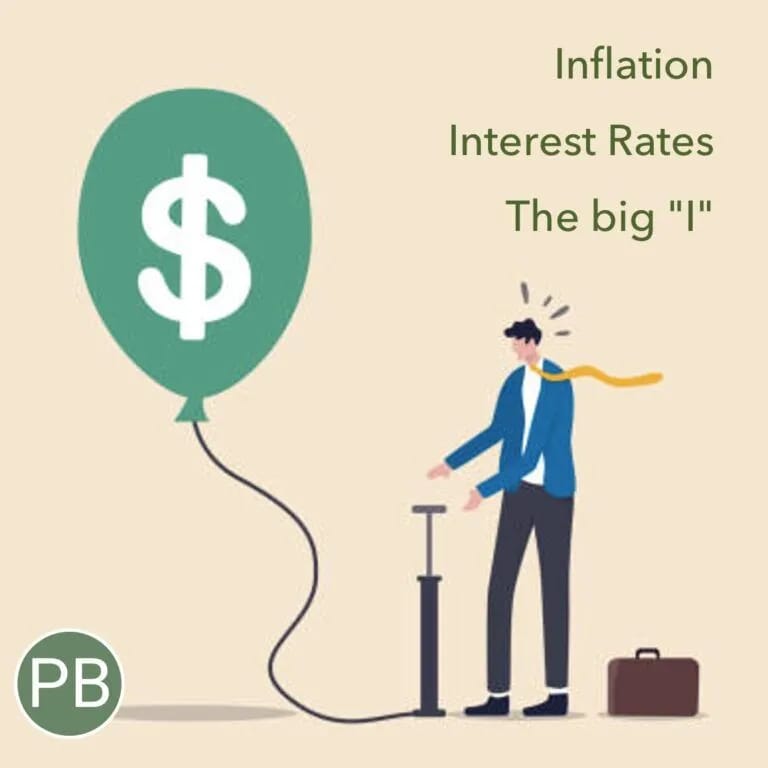
The reserve bank has the job to keep inflation down and to keep unemployment levels down.
It uses the interest rates as the leaver to manage the economy to ensure inflation doesn’t go crazy and to ensure we get as many people employed as possible.
The aggressive approach the reserve had at this stage was because of inflation and to attempt to bring it down.
However where I think they got it wrong this time is the source of why inflation was and is out of control. Normally prices of goods and services go up because people want them and will pay for them.
In the last years our inflation has come from a supply point of view not a demand point of view.
The demand didn’t change, but the supply chain was affected so prices are going up because there are no materials and workforce forcing prices to go up.
Therefore increasing interest rates won’t change the supply problem but it can actually hurt the economy as the businesses will stop investing and stop employing.
The other daunting aspect when we talk about a balanced economy is the possibility of a RECESSION. So what is a recession? On paper or the definition of it is when you have 2 consecutive quarters in a row over six months, showing reduction on prices of goods and services or GDP.
When COVID hit Australia did have a technical recession but quickly got out of it as our economy is very strong.
Around the world when people experienced recession periods there were no jobs, people had no money, no food, and were living in poverty.
Here the recession is only “technical” as it fits the definition but people are not losing jobs. Actually, on the contrary we need a work force to fill up a massive gap we currently have especially in the hospitality industry.
Another very important fact that people don’t realise is that wages growth is another driver of inflation, people need to get paid more because cost of living is higher, however that means they will end up spending more causing inflation to rise.
So again the only tool the reserve bank has will be to keep increasing interest rates to stop wages growth and by default stop spending.
The current dilemma is that this generation has so many advantages and access to easy money through credit cards, after pay, laybuy payments… that spending has not stopped and when you add to all this that most people don’t have any financial education, where they keep basically spending money on the wrong things. What makes it even harder to keep Inflation under control and not increasing interest rates more.
Another interesting point to be observed is that most of the spending comes from a population that doesn’t have mortgages or are not holding onto assets yet. Their sense of money, savings, and investing is almost non-existent.
They live in a world where they want something and they want it now! This is why I believe that just increasing interest rates might not be the solution to control the current real problem we have.
Having said all that Australia’s economy is extremely strong and everyone that wants a job can get a job so as long as you are working and have some cash coming in everything will pass and as it happened before things will stabilise and we will move forward.
In times like this it is important to talk to people that have passed through multiple recessions and multiple property cycles, they can definitely put your heart at ease.
This is just another phase. Don’t let the media and doom and gloom, scare you or derail you from your investment journey. Remember always what Warren Buffet said: “ be fearful when others are greedy, and greedy when others are fearful.”