I recently had the privilege to answer some questions for Forbes Advisors about the current debate on property investors being the cause of the high prices that we are experiencing in the residential market.
As I wasn’t the only person being interviewed they had to limit my participation in the final article published.
However I really thought that the questions were relevant and I enjoyed answering them so I wanted to share them here with everyone.
At the end you can find the link to the Forbes Advisor Publication.
See below all the question asked bySophie Venz and all my answers.
Enjoy!
Forbes Advisors: 1. When was the negative tax gearing break introduced, and how does it benefit Australians with investment properties?
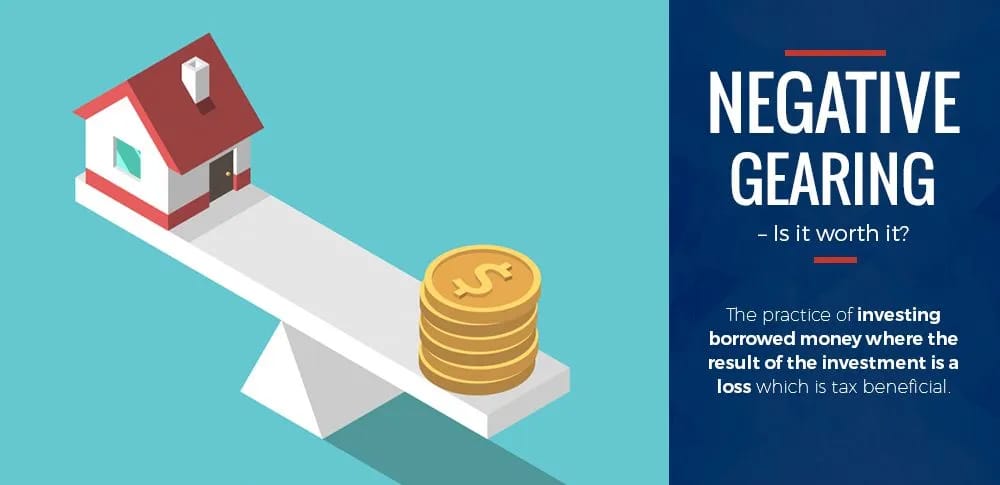
Pina Brandi: Negative gearing was made available in the 80s to investors in order to boost construction and help the government accommodate a growing population.
In July 1985, the Hawke/Keating government made amendments to Negative Gearing Policy and that caused rents to increase significantly in some capital cities from 1985 to 1987.
Subsequently, the government reinstated negative gearing to the original rules to curb the inflated rent prices Australians benefit from negative gearing because the Government doesn’t have resources to provide adequate volume of accommodation to the burgeoning population, let alone affordability schemes and incentives.
By adding tax incentives for investors, they create a stimulus to investors to buy and supporting the construction of more dwellings. This translates into more jobs, more service providers, more opportunities and keeps the country developing.
Forbes Advisors 2. Does this tax break and capital gains tax discount lock the younger demographic out of the property market? How?
Pina Brandi: Investors buy based on returns, market figures, and calculators, while home occupiers use their hearts. Back in 2017 APRA put a break on investor loans by changing their serviceability calculation for investors who owned multiple properties. Little did APRA know
that by slowing investor activity at that time, this resulted in slowing of new construction, which eventually led to the scarcity of properties we have been experiencing in the last 2 years and will still experience for years to come.
It takes a very long time to approve, sell and build a building or a new house estate.
Investors are willing to wait while owner occupiers need a space to live immediately.
Therefore the effect has been that if there was no investment in the past to build because investors couldn’t get finance, where could they possibly live or even try to buy now.
The prices are driven by owner occupiers fighting for a specific dwelling, whereas investors provide the opportunity for that dwelling to exist either to rent or buy.
I don’t believe that the tax benefits are the only cause of the younger generation not being able to enter the market. I believe that is a lack of proper planning around the issue of investment and construction, in order to prevent lack of supply, which has caused a broader issue of affordability.
Forbes Advisors 3. What type of property do you think is the best investment? This can be whether you think apartments are better than houses; whether you think it’s better to invest for rental yield than capital gains; whether you think regional properties are of more value than those in cities.
Pina Brandi: I don’t believe in the one-size-fits-all, cookie-cutter method. The best investment is the one that works for you at that specific point in time. It’s better to get in the market, get some exposure and then move on to the next one. Many new investors are just waiting to have enough funds to purchase whatever they deemed to be the “perfect” investment.
There are so many strategies when it comes to property investing. Some people look for cash flow positive properties, as they are in a low income bracket and need the cash to help them continue their investment journey.
Others instead have the opposite problem; too much cash flow and too much tax, so their strategy is very different. They might just look for investments that will grow in value with time but in this specific moment, an investment helps them pay less tax.
Different dwellings, different locations and different price points will deliver different outcomes that are directly related to your strategy.
Forbes Advisors 4. What should potential investors avoid when looking for property?
They should avoid cutting corners.
Pina Brandi: Some investors don’t want to spend money with the correct reports, professional services or
due diligence.
They”d rather get their advice from a friend at a BBQ, Social Media or out of the news.
I’ll give you an example: back in April 2020 I was working with a couple of buyers that were looking to get into the market and they were ready at that point of time. Then, the news started
reporting that CBA was predicting over 30% fall in the market.
So, what did they do?
They decided that they were going to wait to pay less… and it was a very uncertain time.
And what actually happened?
They missed out in one of the biggest property booms we’ve ever had.
You should base your Investment Property purchase on fundamentals, not on current market
circumstances or trends.
People will always need a roof over their heads and Australia is a growing country that relies
on immigration very much… Where are these people going to live?